Our Participation in the Mystery of Redemption
Participation in the mystery of redemption is achieved primarily through the liturgy, especially the Eucharist, where believers are united with Christ's sacrifice. It is also expressed through active participation in daily life by uniting one's suffering with Christ's, offering oneself in prayer and service, and embracing Christian virtues like charity and faith. This participation makes believers "co-redeemers" alongside Christ, actively engaging in the work of salvation rather than passively receiving it.
By his obedience unto death, Christ brought about our redemption. Before his death, Christ instituted the Church to serve as the means by which the redemption he effected would be brought to all people until he comes again. The Church thus is instrumental not only in making the mystery of redemption known to the world, but also in making its fruits effective within us. This is an achieved primarily through the work of the Holy Spirit in the word of God and the liturgy of the Church, particularly the celebration of the Sacraments.
CCC 1131: “The sacraments are efficacious signs of grace, instituted by Christ and entrusted to the Church, by which divine life is dispensed to us. The visible rites by which the sacraments are celebrated signify and make present the graces proper to each sacrament. They bear fruit in those who receive them with the required dispositions.”
"Efficacious" means that the sacraments actually accomplish what they symbolize through Christ's power, not just point to it. They are "efficacious signs of grace" instituted by Christ and entrusted to the Church, meaning the visible signs (like water in baptism) bring about the invisible grace they represent, such as spiritual cleansing. This efficacy comes from Christ, not the minister, and the sacrament is valid as long as the minister has the intention to perform what the Church intends.
The Sacraments were instituted by Christ as the primary means to impart the grace of his redemption, which enables us to share in his divine life and assists us to reach our heavenly home. Through the liturgy and Sacraments, we can share in the life and love of God, and we can celebrate and participate in the work of our own redemption.
Every Sacrament consists of a sign that signifies its spiritual effect on the soul of the recipient. Each Sacrament unites the recipient to the Passion, Death, Resurrection, and Ascension of the Lord. Through the Sacraments, the graces won by Christ’s sacrifice are applied to the soul. Each Sacrament, in its own particular way, renews and restores supernatural life by the power of the redemption.
CCC 1692: “The Symbol of the faith confesses the greatness of God's gifts to man in his work of creation, and even more in redemption and sanctification. What faith confesses, the sacraments communicate: by the sacraments of rebirth, Christians have become "children of God," "partakers of the divine nature." Coming to see in the faith their new dignity, Christians are called to lead henceforth a life "worthy of the gospel of Christ." They are made capable of doing so by the grace of Christ and the gifts of his Spirit, which they receive through the sacraments and through prayer.”
The rite of each Sacrament signifies and makes present the particular graces conferred by that Sacrament. Each Sacrament bears spiritual fruit through the cooperation and good disposition of those who receive it. Each has a particular function to help reach aa full life in Christ while supplying the grace necessary to help the individual grow in virtue and holiness. Through the Sacrament, as well as its liturgy and its preaching of the Gospel, the Church carries on Christ’s work of redemption.
CCC 1068: “It is this mystery of Christ that the Church proclaims and celebrates in her liturgy so that the faithful may live from it and bear witness to it in the world: For it is in the liturgy, especially in the divine sacrifice of the Eucharist, that "the work of our redemption is accomplished," and it is through the liturgy especially that the faithful are enabled to express in their lives and manifest to others the mystery of Christ and the real nature of the true Church.”
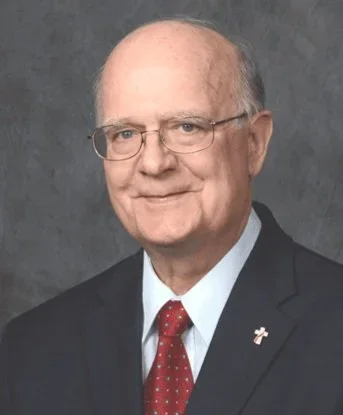
—Deacon Gerry Flamm
“Dear children! Today I invite you to comprehend your Christian vocation. Little children, I led and am leading you through this time of grace, that you may become conscious of your Christian vocation. Holy martyrs died witnessing: I am a Christian and love God over everything. Little children, today also I invite you to rejoice and be joyful Christians, responsible and conscious that God called you in a special way to be joyfully extended hands toward those who do not believe, and that through the example of your life, they may receive faith and love for God. Therefore, pray, pray, pray that your heart may open and be sensitive for the Word of God. Thank you for having responded to my call.”